
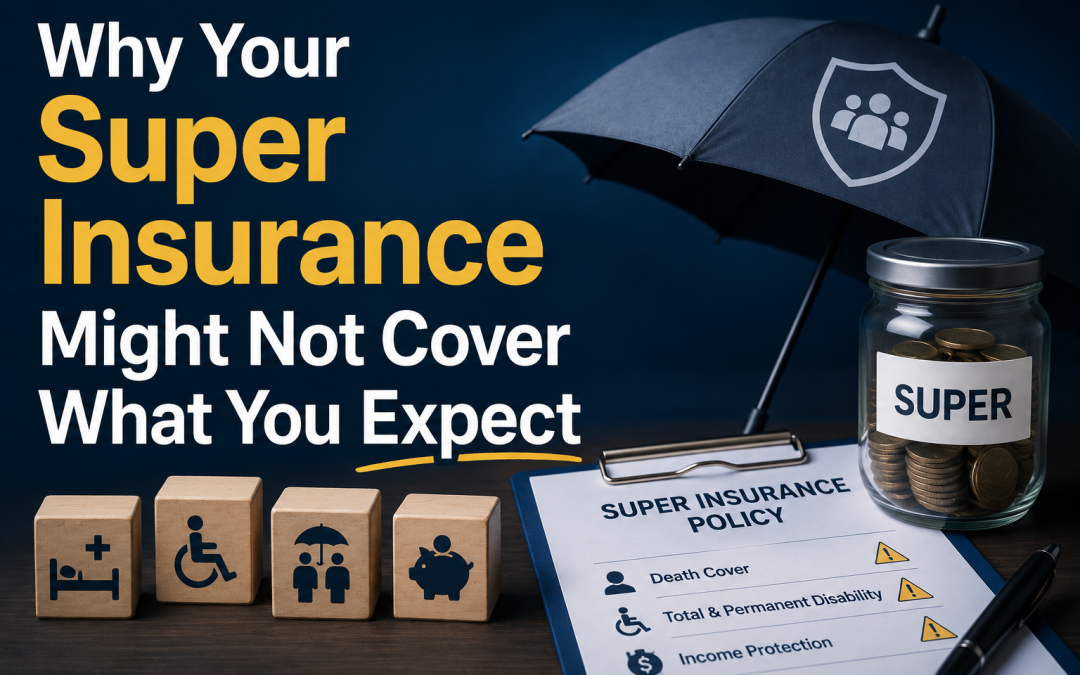
Many Australians are surprised to learn they already have life insurance through their superannuation fund. In fact, millions of super accounts include some form of insurance cover, often without members actively choosing it.
While insurance inside super can be a cost-effective way to protect yourself and your family, it’s also one of the least understood aspects of retirement savings. Many people don’t know what type of cover they have, how much they’re insured for, what exclusions apply, or when their insurance could be cancelled.
Assuming your default insurance will always provide enough protection can be a costly mistake. Changes to superannuation laws, account inactivity rules and differences between funds mean your cover may not be as comprehensive as you think.
Before relying on the insurance attached to your super, it’s worth understanding how it works, when it may stop, and whether it still meets your financial needs.
What Insurance Is Available Through Superannuation?
Many Australian superannuation funds offer members insurance as part of their account.
Depending on the fund, this may include:
- Life insurance (Death Cover) – Pays a benefit if you die or are diagnosed with a terminal medical condition.
- Total and Permanent Disability (TPD) Insurance – Provides a benefit if illness or injury permanently prevents you from working, subject to the policy’s definitions.
- Income Protection Insurance – Replaces part of your income for a limited period if you’re temporarily unable to work due to illness or injury.
The amount and type of insurance available varies between super funds and is subject to each insurer’s terms, conditions and eligibility criteria.
Myth 1: “Everyone Automatically Gets Insurance Through Super”
Automatic Cover Is No Longer Guaranteed
A common misconception is that every superannuation member automatically receives insurance.
Since changes to Australian superannuation legislation, this is no longer the case.
Generally, insurance is not automatically provided if:
- You are under 25 years of age.
- Your account balance is less than $6,000.
- You have not elected to receive insurance.
Some exceptions apply, particularly for employees working in hazardous occupations where certain super funds provide automatic cover under specific arrangements. If you’re starting your first job or are early in your career, it’s worth checking whether you actually have any insurance at all.
Myth 2: “Default Cover Will Be Enough”
Default Insurance Is a Starting Point—Not a Personal Financial Plan
Insurance offered through super is designed to provide basic protection across a large group of members.It isn’t tailored to your personal financial situation.
Your current cover may be insufficient if you have:
- A mortgage.
- Young children.
- A partner who relies on your income.
- Investment loans.
- Business debts.
- Other financial commitments.
Many Australians require significantly more insurance than their default super policy provides.
Check for Exclusions and Premium Loadings
Not every policy provides the same level of protection.
It’s important to understand:
- Waiting periods.
- Benefit periods.
- Occupational exclusions.
- Medical exclusions.
- Pre-existing condition exclusions.
- Definitions used for disability claims.
Some members also pay premium loadings.
A premium loading is an increase above the standard insurance premium and may apply if you:
- Work in a high-risk occupation.
- Smoke or use tobacco products.
- Have certain medical conditions.
- Participate in hazardous activities.
If your occupation or smoking status has changed, you should review your policy to ensure you’re not paying higher premiums unnecessarily.
Myth 3: “My Insurance Will Move with Me If I Change Super Funds”
Changing Super Funds Can Cancel Your Insurance
Many Australians change super funds when changing jobs or consolidating their retirement savings. However, insurance usually does not automatically transfer with your super balance.
If you move to another fund:
- Your existing insurance may end.
- You may lose valuable cover.
- Replacing your policy could require new medical assessments.
- New premiums may be higher due to age or changes in health.
Some insurers allow policies to be converted into retail insurance outside super, but eligibility rules apply and premiums may increase.Before switching funds, always confirm what will happen to your existing insurance.
Myth 4: “If I Stop Contributing, Nothing Will Change”
Inactive Super Accounts Can Lose Insurance
Australian law requires most super funds to cancel insurance where an account has been inactive for 16 months or more.
An account is generally considered inactive if no contributions or rollovers have been received during that period. Your fund will usually attempt to contact you before insurance is cancelled. However, if your contact details are outdated, you may not receive these important notices. Insurance may also cease if:
- Your account balance becomes too low.
- Premiums can no longer be deducted.
- You exceed the policy’s maximum cover age.
Regularly checking your super account and keeping your contact details current can help prevent accidental loss of cover.
Myth 5: “More Super Accounts Mean More Insurance Protection”
Multiple Policies May Simply Mean Multiple Premiums
It’s common for Australians to accumulate several super accounts throughout their working lives. Each account may include separate insurance policies.
While this can sometimes provide additional protection, it can also result in:
- Paying multiple insurance premiums.
- Reduced retirement savings.
- Overlapping or unnecessary cover.
- Administrative complexity when making claims.
Insurance benefits are not always cumulative, and claim outcomes differ between policies. Before consolidating super accounts—or deciding to keep multiple accounts—review each policy carefully to determine whether the cover remains valuable.
Myth 6: “Insurance Through Super Is Always the Cheapest Option”
Lower Cost Doesn’t Always Mean Better Value
Because super funds purchase insurance for large groups of members, premiums are often competitive. However, cheaper premiums don’t necessarily provide better protection.
Important considerations include:
- Benefit amounts.
- Policy definitions.
- Waiting periods.
- Exclusions.
- Premium increases over time.
- Flexibility to adjust cover.
Retail insurance purchased outside super may offer broader cover or greater flexibility depending on your personal circumstances. The right choice depends on your financial goals, family situation and risk profile.
Why It’s Important to Review Your Super Insurance Regularly
Life changes and your insurance should change with it.
You should review your cover whenever you:
- Buy a home.
- Get married or enter a de facto relationship.
- Have children.
- Change jobs.
- Become self-employed.
- Take on significant debt.
- Receive an inheritance.
- Approach retirement.
A policy that suited you five years ago may no longer provide adequate protection today.
Questions to Ask When Reviewing Your Insurance
Before relying on your super insurance, consider asking:
- What type of insurance do I currently have?
- How much cover do I have?
- Is the cover sufficient for my family’s needs?
- What exclusions apply?
- Am I paying a premium loading?
- What happens if I change super funds?
- What happens if I stop working or stop contributing?
- Are there better options available?
Understanding the answers can help you make informed financial decisions.
How a Financial Adviser Can Help
Superannuation insurance can be complicated, particularly when balancing retirement savings with adequate personal protection.
A licensed financial adviser can help you:
- Review your current insurance.
- Identify gaps in your protection.
- Compare cover inside and outside super.
- Explain policy exclusions and definitions.
- Assess whether your level of cover remains appropriate.
- Coordinate insurance when consolidating super accounts.
Regular reviews ensure your insurance continues to align with your financial objectives and changing personal circumstances.
Conclusion
Insurance through superannuation provides valuable financial protection for millions of Australians, but it shouldn’t be treated as a “set and forget” benefit. Default cover is designed to provide a basic level of protection and may not reflect your income, debts, family responsibilities or long-term financial goals.
Changes to superannuation laws, account inactivity rules and differences between insurance policies mean your cover can reduce or even cease without you fully appreciating the consequences. Likewise, switching super funds or consolidating accounts without understanding the impact on your insurance could result in the loss of valuable protection. Taking the time to review your superannuation insurance, understand your policy’s terms and seek professional advice where appropriate can help ensure you and your family have the level of financial protection you expect when it matters most.
Frequently Asked Questions
Do all Australians automatically receive insurance through their super?
No. Under current legislation, most people under 25 or with a super balance below $6,000 do not automatically receive insurance unless they choose to opt in or qualify under specific exceptions.
What types of insurance are available through super?
Most super funds offer Life (Death) Cover, Total and Permanent Disability (TPD) Insurance and, in many cases, Income Protection Insurance.
Can I lose my insurance if I change super funds?
Yes. In many cases, insurance is linked to your membership with a particular super fund. Changing funds may result in your existing cover ending unless appropriate arrangements are made.
Can insurance be cancelled if I stop contributing to my super?
Yes. Most super funds are required to cancel insurance on inactive accounts after 16 months unless you instruct the fund to retain your cover, subject to legislative requirements.
Is insurance through super cheaper than buying it directly?
Often it is competitively priced because super funds purchase insurance in bulk. However, lower premiums don’t always mean the policy provides the most appropriate level of cover or features for your needs.
Why should I review my insurance regularly?
Major life events such as buying a home, starting a family, changing employment or approaching retirement can significantly affect your insurance needs. Regular reviews help ensure your cover remains appropriate.
Should I seek professional advice before changing super funds?
Yes. Before switching or consolidating super accounts, it’s important to understand how the change may affect your insurance and whether alternative cover is required.
Sources
- Australian Taxation Office (ATO)
- Australian Securities and Investments Commission (ASIC)
- Australian Prudential Regulation Authority (APRA)
- Services Australia
How can we help?
If you have any questions or would like further information, please feel free to give our office on 08 9221 5522 or via email – info@camdenprofessionals.com.au or arrange a time for a meeting so we can discuss your requirements in more detail.
General Advice Warning
The material on this page and on this website has been prepared for general information purposes only and not as specific advice to any particular person. Any advice contained on this page and on this website is General Advice and does not take into account any person’s particular investment objectives, financial situation and particular needs.
Before making an investment decision based on this advice you should consider, with or without the assistance of a securities adviser, whether it is appropriate to your particular investment needs, objectives and financial circumstances. In addition, the examples provided on this page and on this website are for illustrative purposes only.
Although every effort has been made to verify the accuracy of the information contained on this page and on this website, Camden Professionals, its officers, representatives, employees, and agents disclaim all liability [except for any liability which by law cannot be excluded), for any error, inaccuracy in, or omission from the information contained in this website or any loss or damage suffered by any person directly or indirectly through relying on this information.
Recent Comments