
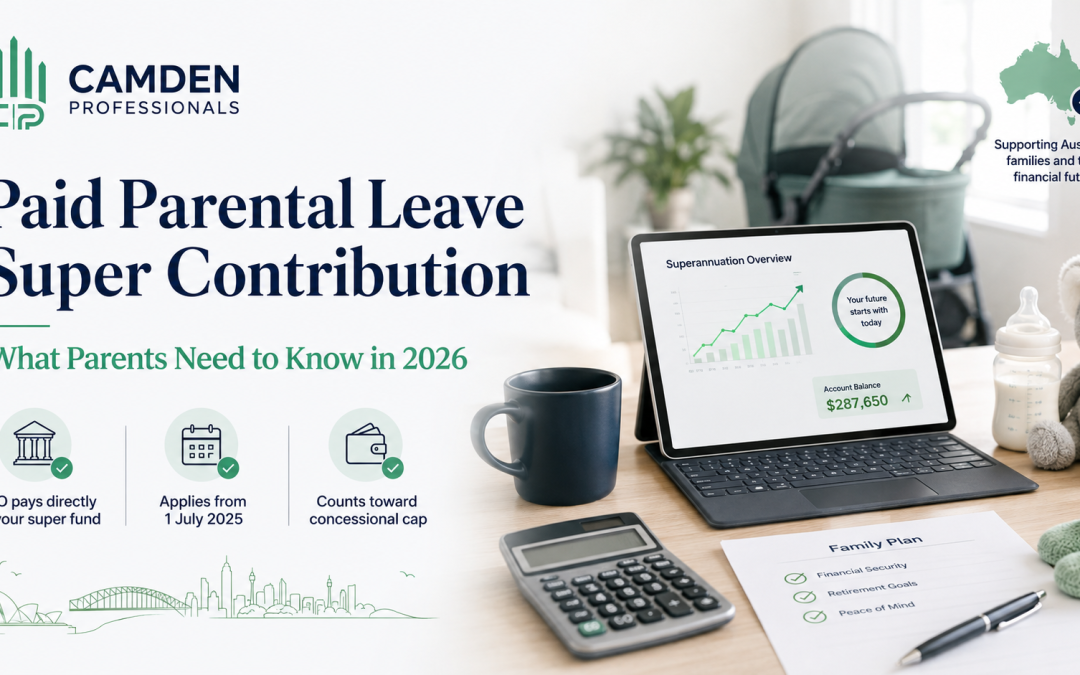
For many Australian parents, taking time away from work to care for a new child can affect long-term retirement savings. From 1 July 2025, the Australian Government introduced the Paid Parental Leave Superannuation Contribution (PPLSC) for eligible recipients of government-funded Parental Leave Pay.
The Australian Taxation Office (ATO) calculates and pays the contribution directly into the eligible parent’s superannuation fund. Parents do not need to make a separate application.
This article explains eligibility, how the contribution is calculated, when it is paid, how it is taxed and what parents should check to ensure their payment is made correctly.
What Is the Paid Parental Leave Superannuation Contribution?
The Paid Parental Leave Superannuation Contribution (PPLSC) is a superannuation contribution paid by the ATO on eligible government-funded Parental Leave Pay.
The measure applies where a child is born or adopted on or after 1 July 2025 and the parent is eligible for Australian Government Parental Leave Pay. The contribution is calculated using the applicable superannuation guarantee (SG) rate. The current SG rate is 12%, with an interest component included because the contribution is paid after the relevant financial year.
Who Is Eligible for Paid Parental Leave Super?
You may be entitled to a PPLSC if:
- your child was born or adopted on or after 1 July 2025
- you receive government-funded Parental Leave Pay
- you meet the eligibility requirements for the Australian Government Paid Parental Leave scheme
- you have an eligible superannuation account into which the contribution can be paid.
Eligible parents do not need to submit a separate claim. The ATO calculates the contribution automatically.
How Much Superannuation Will You Receive?
The PPLSC is generally calculated by applying the applicable SG rate to eligible Parental Leave Pay.
For example, if a parent receives $20,000 of eligible Parental Leave Pay, a simplified calculation at 12% would be:
$20,000 × 12% = $2,400
The actual contribution may differ because an interest component can be included. The amount ultimately received depends on the Parental Leave Pay received and the calculation required under the legislation.
When Will the Paid Parental Leave Super Contribution Be Paid?
The PPLSC is not paid at the same time as Parental Leave Pay.
The ATO pays the contribution after the end of the financial year in which the relevant Parental Leave Pay was received. Payments commenced from July 2026 for eligible Parental Leave Pay received during the 2025–26 financial year.
Parents should therefore not expect the contribution to appear in their super fund immediately after receiving Parental Leave Pay. The ATO will notify eligible recipients when the contribution has been paid.
Does the ATO Pay the Superannuation Directly?
Yes.
The PPLSC is paid directly by the ATO to the parent’s superannuation fund. In most circumstances, the contribution will be paid into the fund to which the parent’s superannuation contributions are currently being made.
Parents generally do not need to contact their employer or make a separate claim with their super fund.
What Do Parents Need to Do?
Although the PPLSC is calculated and paid automatically, parents should check several important details.
1. Check Your Personal Details
Make sure your name, address and other identifying information are correct with both Services Australia and the ATO. Your details should be consistent across government records.
If you have recently changed your name, update your details with both agencies. Incorrect personal information can delay payment.
2. Check Your Tax File Number
Your Tax File Number (TFN) should be correctly recorded with your superannuation fund.
Check that your name, address and TFN details are consistent between the ATO and your super fund. If your TFN has not been provided to your super fund, additional tax may apply to certain superannuation contributions.
3. Check Your Super Fund Details
Confirm that the ATO has the correct superannuation information, including your:
- super fund name
- member number
- TFN
- name and address
- nominated superannuation account.
Checking these details can help prevent delays or payments being directed incorrectly.
What Happens If You Share Parental Leave Pay?
Parents can share Parental Leave Pay, subject to the applicable rules.
Where Parental Leave Pay is shared between two eligible people, each person can receive a PPLSC based on their respective share of the payment.
How Is Paid Parental Leave Super Taxed?
The PPLSC is generally treated as a concessional superannuation contribution.
The ATO confirms that the contribution will generally be taxed at 15% in the superannuation fund. It also counts towards the parent’s concessional contributions cap for the financial year in which the contribution is made.
Parents who also receive employer superannuation contributions, salary sacrifice contributions or make personal deductible contributions should consider their total concessional contributions.
Does the PPLSC Count Towards Your Concessional Contributions Cap?
Yes.
The PPLSC counts towards the concessional contributions cap. This means it needs to be considered alongside:
- compulsory employer superannuation contributions
- salary sacrifice contributions
- personal contributions claimed as a tax deduction
- other concessional contributions.
Why This Matters
For parents who have already made significant concessional contributions during the year, the additional PPLSC could contribute to an excess concessional contribution position.
This may be particularly relevant to higher-income earners, people making salary sacrifice contributions and those using unused concessional contribution caps from previous years.
If you are close to your concessional contributions cap, review your superannuation position before making additional voluntary contributions.
Can the PPLSC Cause an Excess Concessional Contribution?
Potentially, yes.
Because the PPLSC counts towards the concessional contributions cap, it must be included when calculating total concessional contributions. If contributions exceed the applicable cap, the ATO has processes for dealing with excess contributions.
Special circumstances may also apply in some situations. Parents concerned about exceeding their cap should consider obtaining professional tax or superannuation advice before making additional contributions.
Is the Paid Parental Leave Super Contribution Taxable Income?
The PPLSC is a superannuation contribution, rather than salary or wages paid directly to the parent.
It is generally taxed within the superannuation environment rather than as ordinary taxable income in the parent’s hands. The ATO confirms that it is generally taxed at 15% in the super fund.
The PPLSC is also not considered income for social security, family assistance and child support purposes.
Does the Employer Have to Pay Super on Parental Leave Pay?
No.
The introduction of the PPLSC does not require employers to calculate and pay superannuation guarantee contributions on government-funded Parental Leave Pay.
The ATO pays the PPLSC directly to the employee’s superannuation fund, and employers do not need to calculate or pay the contribution.
What Does the Employer Need to Do?
Employers do not need to:
- calculate the PPLSC
- pay the PPLSC
- send the PPLSC to the employee’s super fund
- make a separate superannuation payment for government-funded Parental Leave Pay.
The ATO handles the PPLSC after the relevant financial year ends.
Employers should nevertheless ensure payroll records correctly identify Parental Leave Pay separately from amounts that attract normal superannuation guarantee obligations.
What If Your Parental Leave Pay Is Adjusted?
If Services Australia subsequently adjusts your Parental Leave Pay, the amount of PPLSC you are entitled to may also need to be adjusted.
This could occur because of an overpayment or another change to your entitlement. Parents should keep their Services Australia payment records and check their superannuation account when the PPLSC is paid.
Why the New Superannuation Payment Matters
Taking time away from employment to care for children can create an interruption to compulsory employer superannuation contributions.
Under the previous arrangements, a parent receiving government-funded Parental Leave Pay could receive the government payment without an equivalent superannuation contribution. The PPLSC helps reduce this retirement savings gap by providing a contribution linked to eligible Parental Leave Pay.
Over a long working life, additional superannuation contributions can have a meaningful effect because investment earnings may compound over time.
A Simple Example of the New Parental Leave Superannuation Rules
Consider a parent who receives $20,000 of eligible Parental Leave Pay.
At a 12% superannuation rate, the simplified calculation is:
$20,000 × 12% = $2,400
An interest component may then be added because the PPLSC is paid after the end of the relevant financial year.
The contribution would generally be paid into the parent’s superannuation fund and taxed at 15% within the fund. It would also count towards the parent’s concessional contributions cap.
This is a simplified example only. The actual PPLSC is calculated under the legislation and may vary depending on the circumstances.
What Parents Should Check Before the ATO Pays Their Super
Parents receiving Parental Leave Pay should consider these steps:
- Check your ATO personal details.
- Check your Services Australia details.
- Make sure your name and date of birth are consistent across records.
- Check that your TFN has been provided to your super fund.
- Confirm your super fund account is active and current.
- Review your concessional contributions for the financial year.
- Consider the PPLSC when planning salary sacrifice or personal deductible contributions.
- Check your super account after the ATO makes the payment.
These checks can help reduce the risk of a delayed or incorrectly directed contribution.
How the Paid Parental Leave Super Contribution Fits Into Your Retirement Strategy
The PPLSC should not be considered in isolation.
Parents returning to work after parental leave may also benefit from reviewing their broader superannuation strategy, including:
- employer superannuation contributions
- salary sacrifice arrangements
- unused concessional contribution amounts
- personal deductible contributions
- superannuation investment options
- insurance held through super
- beneficiary nominations
- spouse contribution strategies
- overall retirement goals.
The PPLSC is designed to help maintain retirement savings while a parent receives government-funded Parental Leave Pay. However, parents may still experience a broader interruption to retirement savings during periods away from paid employment.
Frequently Asked Questions About Paid Parental Leave Superannuation
Does everyone receiving Parental Leave Pay receive superannuation?
Eligible recipients can receive the PPLSC where the child is born or adopted on or after 1 July 2025 and the person receives eligible government-funded Parental Leave Pay. The ATO calculates the contribution automatically.
When did Paid Parental Leave superannuation start?
The PPLSC applies to eligible Parental Leave Pay for children born or adopted from 1 July 2025. Payments of the resulting superannuation contributions began from July 2026, after the relevant financial year ended.
Do I need to apply for the Paid Parental Leave Superannuation Contribution?
No. If you are eligible, the PPLSC is calculated and paid automatically. You do not need to submit a separate claim for the superannuation contribution.
How much super do I get on Paid Parental Leave?
The contribution is based on the applicable superannuation guarantee rate. The current rate is 12%. An interest component is also included because the contribution is paid after the relevant financial year.
Is the Paid Parental Leave Super Contribution taxed?
Yes. The ATO states that PPLSC is generally taxed at 15% in the superannuation fund.
Does Paid Parental Leave super count towards my contribution cap?
Yes. PPLSC counts towards your concessional contributions cap. This should be considered when making salary sacrifice or other concessional superannuation contributions.
Does my employer have to pay the PPLSC?
No. The ATO pays the PPLSC directly to the employee’s superannuation fund. Employers do not need to calculate or pay this contribution.
Can my employer make additional super contributions while I receive Parental Leave Pay?
Yes. Employers can choose to make voluntary superannuation contributions, although they are not required to pay compulsory superannuation on government-funded Parental Leave Pay.
What happens if I share Parental Leave Pay with my partner?
Each eligible person can receive a PPLSC based on their respective share of Parental Leave Pay.
What happens if I change super funds?
You should ensure your current superannuation and personal details are correctly recorded. The ATO generally pays the PPLSC into the fund where your superannuation contributions are currently being paid.
What if I am close to my concessional contributions cap?
You should take the PPLSC into account when calculating your total concessional contributions. If you are close to your cap, consider obtaining professional advice before making additional concessional contributions.
Key Takeaway for Australian Parents
The Paid Parental Leave Superannuation Contribution is an important change to Australia’s parental leave system.
For eligible parents of children born or adopted from 1 July 2025, government-funded Parental Leave Pay can now result in an additional superannuation contribution paid directly into their super fund.
The payment is automatic, is generally taxed at 15% within super and counts towards the concessional contributions cap. Parents should make sure their ATO, Services Australia and superannuation records are accurate and consider the PPLSC when reviewing their overall superannuation contribution strategy.
For employers, the key message is simpler: you do not need to calculate or pay the PPLSC. The ATO is responsible for paying the contribution directly to the employee’s super fund after the relevant financial year.
Sources
- Australian Taxation Office – Paid Parental Leave Superannuation Contribution
- Services Australia – About the Paid Parental Leave scheme
- Services Australia – How much Parental Leave Pay you can get
- Services Australia – Employers’ role in the Paid Parental Leave scheme
- Federal Register of Legislation – Paid Parental Leave Act 2010
Recent Comments