




How to Lodge a Tax Return With Multiple Income Sources in Australia
Having more than one source of income can make your Australian tax return more complicated.You might have a full-time job and a side business, work two jobs, switch from employee to contractor, earn FIFO income or receive money from overseas.
The basic rule is simple: you generally report all relevant income in your individual tax return.
The challenge is making sure each type of income is reported correctly, deductions are allocated properly and enough tax has been paid throughout the year. Here’s what to know if you have multiple income sources.
Do You Need a Separate Tax Return for Each Income Source?
No.
If you have several jobs or income streams, you generally report them in the same individual tax return.
This could include:
- PAYG salary and wages
- ABN or sole trader income
- Investment income
- Rental income
- Government payments
- Foreign income
- Other assessable income
Your total taxable income is then used to determine your overall tax liability.
The important point is that different income sources can have different tax and deduction rules.
Working Two or More Jobs
Having two jobs is one of the most common reasons people end up with an unexpected tax bill.The problem is that each employer generally calculates PAYG withholding based on the income they pay you.They do not necessarily know what you are earning from another employer.

Watch the Tax-Free Threshold
Australian residents can generally claim the tax-free threshold from only one employer at a time. If you claim it from more than one employer while working both jobs, insufficient tax may be withheld during the year.
If you have two jobs at the same time:
- Check which employer is claiming your tax-free threshold.
- Review your PAYG withholding if your circumstances change.
- Consider asking your employer to deduct an additional amount from your pay if required.
PAYG Employment Plus ABN Income
Another common situation is having a regular job while earning extra money as a contractor or sole trader.
For example, you might:
- Work full-time and freelance on weekends
- Consult outside your normal employment
- Drive for a platform
- Run an online business
- Undertake contract work using an ABN
Your employment income and business income are reported in your tax return, but they are treated differently.Your PAYG employer generally withholds tax from your wages.With ABN income, you may receive payments without tax being withheld.This can result in a tax bill at the end of the financial year.

Put Money Aside for Tax
If your ABN clients are not withholding tax, consider putting part of each payment aside to cover your eventual tax liability.
The amount you need will depend on:
- Your total income
- Your deductions
- Your individual circumstances
Do not rely on a fixed percentage, as everyone’s tax position is different.
Keep Business and Employment Deductions Separate
One of the biggest mistakes with multiple income sources is claiming expenses against the wrong type of income.Generally, expenses must have a connection to the income they help you earn.
For example:
- An expense relating solely to your contracting work may be a business deduction.
- An eligible work expense relating to your employment may be a work-related deduction.
- An expense used for both purposes may need to be apportioned.
Keep separate records for your employment and business activities.Do not claim an expense simply because you paid for it while working.The expense must meet the relevant deduction rules and, where required, be supported by records.
Don’t Forget Personal Services Income (PSI)
If your ABN income mainly comes from your personal skills or labour, the Personal Services Income (PSI) rules may apply. PSI can affect which deductions you can claim and how your income is treated.
This can be particularly relevant to:
- Consultants
- IT professionals
- Engineers
- Other skilled workers
If most of your income comes from your own personal efforts, check whether the PSI rules apply before lodging your return.
Do You Need to Register for GST?
If you are operating a business or working as a sole trader, GST may also need to be considered.The GST registration threshold is generally $75,000 in GST turnover for most businesses. Importantly, GST turnover relates to your business activities. Your PAYG salary from employment is not simply added to your business turnover when determining whether you have crossed the GST threshold. If you are approaching or exceeding the threshold, review your GST registration obligations.

Don’t Wait Until Tax Time to Deal With GST
GST, BAS and income tax are separate obligations and need to be managed throughout the year. Keeping accurate records can help prevent unexpected tax issues.
If You Changed From Employee to Contractor
Switching from employment to contracting during the financial year can create an unusual tax situation.
During your employment period:
- Your employer generally withheld PAYG tax.
After becoming a contractor:
- You may have received payments without tax being withheld.
Your tax return needs to include both periods.
This can result in an unexpected tax bill because tax was automatically withheld during your employment period but may not have been withheld from your contracting income.
Review Your Position When Moving Into Contracting
When moving into contracting, review:
- Expected annual income
- Business expenses
- GST position
- Tax obligations
Early planning can help avoid unexpected liabilities.
FIFO and Remote Workers
FIFO workers can also have more complicated tax returns, particularly if they have investment income, side businesses or other income sources. One common misconception is that working at a remote mine or worksite automatically makes you eligible for tax benefits.
This is not always the case.
Eligibility generally depends on:
- Where your usual place of residence is
- How long you lived there
- Whether you meet specific requirements
Keep evidence of:
- Your usual residence
- Dates you lived there
- Employment arrangements
Travel and accommodation deductions also depend on your circumstances and the nature of the expense.
Do not assume that all FIFO travel costs are automatically deductible.
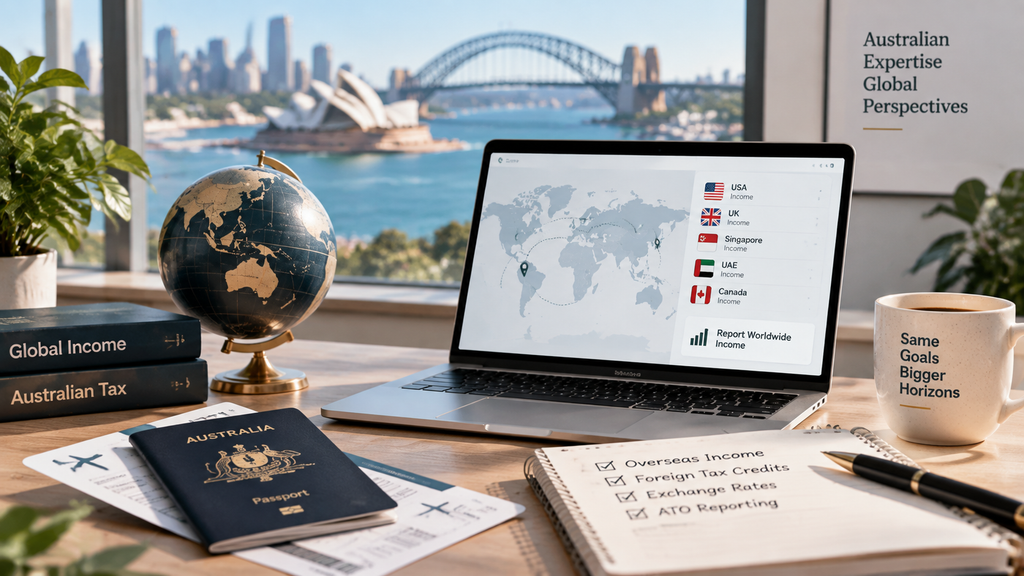
What If You Earned Income From Overseas?
Australian tax residency is extremely important when you have foreign income.
Australian tax residents are generally taxed on their worldwide income.
This may include:
- Foreign salary
- Interest
- Dividends
- Rental income
- Other assessable foreign income
Foreign income generally needs to be converted into Australian dollars for Australian tax purposes.
What If You Already Paid Tax Overseas?
You may be entitled to a foreign income tax offset (FITO) for eligible foreign tax paid.
Generally:
- The foreign tax must have actually been paid.
- The related income or gain must be included in your Australian assessable income.
Keep your overseas tax statements and supporting documents. Do not assume paying tax overseas means you do not need to declare the income in Australia. Your tax residency and relevant tax treaties can affect the outcome.
Common Mistakes With Multiple Income Sources
When your return includes several types of income, watch out for these common mistakes.
Forgetting an Income Source
Make a list of every:
- Employer
- Business activity
- Investment
- Overseas income source
before lodging your return.
Claiming the Tax-Free Threshold Twice.
If you are working multiple jobs simultaneously, check which employer is claiming it.
Spending All Your ABN Income
Remember that tax may not have been withheld from contractor payments.
Mixing Business and Personal Expenses
Keep business records separate and only claim expenses that meet the relevant rules.
Ignoring GST
If you are operating a business and approaching the GST threshold, review your registration obligations early.
Assuming FIFO Means Automatic Tax Benefits
Working remotely or at a mine site does not automatically qualify you for every tax deduction or offset.
Forgetting Foreign Income
Australian tax residents generally need to declare worldwide income, even if the money remains overseas.
Documents to Have Ready
Before lodging your tax return, gather:
Employment Income
- Income statements
- PAYG payment information
- Work-related expense records
- Details of any allowances or reimbursements
ABN or Business Income
- Invoices and payment records
- Business expenses and receipts
- BAS records
- PAYG instalment information
Investments
- Bank interest records
- Dividend statements
- Managed fund statements
- Rental property records
- Capital gains and losses information
Foreign Income
- Overseas payslips or income statements
- Foreign tax records
- Exchange-rate information
- Evidence of foreign tax paid
FIFO or Remote Work
- Employment records
- Residence information
- Allowance details
- Relevant travel and accommodation records

How to Make Your Tax Return Easier
If you have multiple income sources, do not wait until tax time to organise everything.Keep records throughout the year.
Set up separate folders for:
- Employment income
- Business income
- Investments
- Foreign income
Track ABN income separately. Record every payment received and every business expense. Check your PAYG withholding if your income changes significantly. Review your tax position before 30 June. If you are expecting a large tax bill, early planning may give you more options.
Get Advice When Things Become Complicated
Multiple income sources are not necessarily a problem.
However, the interaction between different types of income, deductions, GST and tax offsets can become complex.
If your situation includes:
- Contracting
- Foreign income
- Investment properties
- Trusts
- Significant business income
professional tax advice can help ensure everything is reported correctly.
The Bottom Line
Having multiple income sources does not mean you need multiple tax returns. Your relevant income is generally brought together in your individual return, but how each income stream is treated can vary considerably.
The key is to:
- Keep good records
- Understand your PAYG withholding
- Separate business and employment expenses
- Check your GST obligations
- Make sure foreign income is reported correctly
A little planning throughout the year can make tax time much easier and help reduce the risk of an unexpected tax bill.
Frequently Asked Questions
Do I need a separate tax return for each job?
No. Multiple employment income sources are generally reported in the same individual tax return.
Can I claim the tax-free threshold with two employers?
Generally, you should only claim the tax-free threshold from one employer at a time when working multiple jobs simultaneously.
Do I pay tax on ABN income?
Yes. Business or contracting income generally needs to be declared, with tax calculated as part of your overall taxable income.
Do I need GST registration if I have an ABN?
Not automatically. GST registration is generally required once your business reaches the applicable $75,000 GST turnover threshold, subject to the relevant rules and exceptions.
Do Australian residents have to declare foreign income?
Generally, yes. Australian tax residents are generally taxed on worldwide income, subject to specific exceptions.
Can I claim tax on income already taxed overseas?
You may be able to claim a foreign income tax offset if you meet the eligibility requirements.
How Can We Help?
If you have any questions or would like further information, please contact Camden Professionals on:
Phone: 08 9221 5522
Email: info@camdenprofessionals.com.au
You can also arrange a meeting so we can discuss your requirements in more detail.
General Information Disclaimer
The material on this page and on this website has been prepared for general information purposes only and not as specific advice to any person. Any advice contained on this page and on this website is General Advice and does not consider any person’s particular investment objectives, financial situation and particular needs.
Before making an investment decision based on this advice you should consider, with or without the assistance of a securities adviser, whether it is appropriate to your particular investment needs, objectives and financial circumstances. In addition, the examples provided on this page and on this website are for illustrative purposes only.
Although every effort has been made to verify the accuracy of the information contained on this page and on this website, Camden Professionals and/or Investax Group, its officers, representatives, employees, and agents disclaim all liability (except for any liability which by law cannot be excluded), for any error, inaccuracy in, or omission from the information contained in this website or any loss or damage suffered by any person directly or indirectly through relying on this information.
CGT Changes From 1 July 2027: Should You Sell, Hold or Restructure Your Investments?
Capital Gains Tax (CGT) is an important consideration for Australian investors, property owners and business owners when making decisions about their assets.Changes proposed to Australia’s CGT framework from 1 July 2027 may influence how investors approach buying, holding and selling assets.
For many Australians, the decision is not simply about whether an asset has increased in value.
It is also about understanding:
- The tax consequences of selling
- The benefits of holding assets long term
- The impact of ownership structures
- Future investment and wealth planning goals
With potential changes ahead, reviewing your investment strategy early can help you make more informed decisions.
What Is Capital Gains Tax (CGT)?
Capital Gains Tax is the tax applied when you make a capital gain from disposing of an asset.
A capital gain generally occurs when:
- You sell an asset for more than its original cost
- You transfer ownership of an asset
- You dispose of an investment
Common assets that may be subject to CGT include:
- Investment properties
- Shares and managed funds
- Business assets
- Certain personal assets
The capital gain is generally calculated by comparing the asset’s cost base with the amount received when the asset is sold or disposed of.

What Are the Proposed CGT Changes From 1 July 2027?
The proposed CGT changes from 1 July 2027 may affect how some Australians plan their investments and asset ownership. For investors, the key consideration is not only the tax rate but also how future decisions may affect:
- Investment returns
- Asset ownership structures
- Retirement planning
- Estate planning outcomes
The impact will depend on individual circumstances, including:
- Type of asset held
- Length of ownership
- Ownership structure
- Future plans
Why CGT Planning Matters for Investors
Many investment decisions involve a balance between growth, income and tax outcomes. Selling an asset may create an immediate tax obligation, while holding an asset may continue providing:
- Capital growth potential
- Rental income
- Dividend income
- Long-term wealth accumulation
The right decision depends on your broader financial strategy rather than tax alone.
Should You Sell Your Investments Before 1 July 2027?
Selling an asset before a tax change is not automatically the right decision. While some investors may consider selling before a change takes effect, it is important to consider:
- Whether the asset is still suitable
- The current market conditions
- The tax consequences of selling
- Future investment opportunities
A decision made purely to avoid tax may not always create the best financial outcome.

Reasons Investors May Consider Selling
There may be situations where selling an asset before a CGT change could be appropriate. Examples include:
Taking Advantage of Existing Tax Rules
Some investors may consider whether selling before changes apply provides a more favourable tax outcome.
Rebalancing an Investment Portfolio
Selling may allow investors to:
- Reduce concentration risk
- Diversify investments
- Adjust their investment strategy
Changing Investment Objectives
Personal circumstances may change due to:
- Retirement
- Business changes
- Family circumstances
- Financial goals
Reasons Investors May Consider Holding Assets
Holding an investment may continue to provide benefits.
Long-term ownership can allow investors to benefit from:
- Potential capital growth
- Rental income
- Dividend income
- Compounding returns
Selling an asset also means losing future exposure to that investment. Before selling, consider whether the asset still aligns with your long-term strategy.
The Importance of Ownership Structure
The tax outcome of an investment decision can depend significantly on how an asset is owned.
Different ownership structures may include:
- Individual ownership
- Joint ownership
- Company ownership
- Trust ownership
- Superannuation ownership
Each structure has different tax implications. For example, an asset owned personally may have different CGT outcomes compared with an asset held through a company or trust.
Reviewing ownership structure before making changes can help avoid unexpected tax consequences.

CGT and Investment Property
Investment property is one of the most common assets affected by CGT.
Property owners should consider:
- Original purchase cost
- Improvements made to the property
- Holding period
- Rental income history
- Available CGT concessions
Selling an investment property can create a significant capital gain, particularly where the property has experienced substantial growth.
Before selling, property owners should understand the potential tax impact.
CGT and Business Owners
Business owners should also consider CGT when making decisions about:
- Selling a business
- Restructuring ownership
- Transferring assets
- Succession planning
A business sale can create significant capital gains depending on:
- Business structure
- Asset ownership
- Eligibility for concessions
- Timing of the transaction
Early planning can provide more opportunities to manage tax outcomes.
Should You Restructure Your Investments?
Restructuring may be considered by investors who want to improve:
- Tax efficiency
- Asset protection
- Succession planning
- Long-term wealth outcomes
However, restructuring existing assets can create tax and transaction costs.
Potential considerations include:
- CGT consequences
- Stamp duty
- Legal costs
- Administration costs
- Financing arrangements
Any restructuring decision should be carefully reviewed before implementation.

Common CGT Planning Mistakes
Selling Only Because of a Tax Change
Tax should be considered as part of the decision, not the only reason.
Ignoring Future Growth Potential
Selling an asset may remove future investment opportunities.
Failing to Review Ownership Structure
The way an asset is owned can significantly affect tax outcomes.
Leaving Planning Too Late
Complex investment decisions often require time and professional advice.
Not Considering Estate Planning
Investment decisions can also affect future wealth transfer outcomes.
How Should Investors Prepare for CGT Changes?
Investors should consider reviewing their position before any proposed changes take effect.
Important steps include:
- Reviewing investment portfolios
- Understanding potential CGT exposure
- Reviewing ownership structures
- Considering future investment goals
- Assessing retirement and estate planning outcomes
Preparation can help investors make decisions based on strategy rather than urgency.
The Role of Professional Advice
CGT planning can become complex, particularly when dealing with:
- Multiple investments
- Property portfolios
- Business assets
- Trust structures
- Significant capital gains
Professional advice can help investors understand:
- Available options
- Potential tax outcomes
- Timing considerations
- Long-term implications

Final Thoughts
The proposed CGT changes from 1 July 2027 highlight the importance of reviewing investment strategies early. There is no universal answer to whether investors should sell, hold or restructure their assets. The right decision depends on:
- Personal circumstances
- Investment objectives
- Tax position
- Long-term wealth goals
Rather than making decisions based only on tax changes, investors should consider how each option fits into their broader financial strategy.
Frequently Asked Questions
What is Capital Gains Tax (CGT)?
Capital Gains Tax is the tax that applies when you make a capital gain from disposing of an asset.
Are CGT changes happening from 1 July 2027?
Proposed CGT changes from 1 July 2027 may affect how investors approach asset sales, ownership structures and tax planning decisions.
Should I sell my investment before CGT changes?
Not necessarily. Selling should be based on your overall investment strategy, financial position and long-term objectives.
Will holding an investment avoid CGT?
Holding an asset generally delays the CGT event until the asset is disposed of, but future tax consequences should still be considered.
Does ownership structure affect CGT?
Yes. The tax outcome can vary depending on whether an asset is owned personally, jointly, through a company, trust or another structure.
Should I restructure my investments before CGT changes?
Restructuring may be beneficial in some situations, but it can also create tax and transaction costs. Professional advice should be obtained before making changes.
How Can We Help?
If you are concerned about how potential CGT changes may affect your investments, Camden Professionals can help review your current position and discuss possible strategies.
Our team can assist with:
- Capital gains tax planning
- Investment structure reviews
- Property and business tax considerations
- Long-term wealth planning
Contact Camden Professionals to discuss your requirements and understand your available options.
General Information Disclaimer
The material on this page and on this website has been prepared for general information purposes only and not as specific advice to any person. Any advice contained on this page and on this website is General Advice and does not consider any person’s particular investment objectives, financial situation and particular needs.
Before making an investment decision based on this advice you should consider, with or without the assistance of a securities adviser, whether it is appropriate to your particular investment needs, objectives and financial circumstances. In addition, the examples provided on this page and on this website are for illustrative purposes only.
Although every effort has been made to verify the accuracy of the information contained on this page and on this website, Camden Professionals and/or Investax Group, its officers, representatives, employees, and agents disclaim all liability (except for any liability which by law cannot be excluded), for any error, inaccuracy in, or omission from the information contained in this website or any loss or damage suffered by any person directly or indirectly through relying on this information.
$20,000 Instant Asset Write-Off Made Permanent: What Australian Small Businesses Need to Know
The $20,000 instant asset write-off has been made a permanent tax measure for eligible Australian small businesses.This provides greater certainty for business owners planning equipment purchases, technology upgrades and other asset investments.
For many small businesses, investing in assets is an important part of growth. Whether it is upgrading tools, purchasing business equipment or improving technology systems, understanding how these purchases are treated for tax purposes can help with better financial planning. The permanent $20,000 instant asset write-off allows eligible small businesses to immediately deduct the cost of eligible assets costing less than $20,000, rather than claiming the deduction over several years through depreciation.
What Is the Instant Asset Write-Off?
The instant asset write-off is a tax concession that allows eligible small businesses to immediately claim a deduction for the cost of certain business assets.Normally, business assets are depreciated over their effective life, meaning the tax deduction is spread across multiple years.
Under the instant asset write-off rules, eligible businesses may be able to claim the full cost of qualifying assets in the year the asset is first used or installed ready for use.
This can help improve cash flow and simplify tax management for small businesses.
What Does Making the $20,000 Threshold Permanent Mean?
Previously, the $20,000 instant asset write-off threshold was subject to temporary extensions and changes. Making the measure permanent provides more certainty for small business owners when planning future investments. Business owners can now have greater confidence when making decisions about:
- Purchasing equipment
- Replacing business assets
- Investing in technology
- Expanding operations
Rather than waiting for temporary extensions, eligible businesses can plan purchases knowing the measure is expected to continue.

Who Can Use the $20,000 Instant Asset Write-Off?
The instant asset write-off is available to eligible small businesses that meet the relevant requirements. Generally, eligibility depends on factors including:
- Business structure
- Aggregated turnover
- Asset type
- How the asset is used
Small businesses should confirm their eligibility before claiming the deduction.
What Assets Can Qualify?
Eligible assets may include business assets used in operating the business. Examples may include:
- Computers and technology equipment
- Office equipment
- Tools and machinery
- Business vehicles
- Furniture and fittings
- Other qualifying business assets
The asset must generally be used for business purposes and meet the relevant tax requirements.
What Assets Cannot Be Claimed?
Not every purchase qualifies for the instant asset write-off. Examples of items that may not qualify include:
- Assets above the threshold amount
- Assets not used for business purposes
- Certain excluded assets
- Personal purchases
If an asset does not qualify, normal depreciation rules may apply.

How Does the $20,000 Write-Off Work?
For example: A small business purchases a computer system costing:
$8,000
If the business is eligible and the asset qualifies, the business may be able to claim the full $8,000 deduction in the relevant financial year. Without the instant asset write-off, the deduction may need to be claimed over several years through depreciation.
What Happens If an Asset Costs More Than $20,000?
Assets costing $20,000 or more generally cannot be immediately deducted under the instant asset write-off.Instead, these assets may need to be depreciated under the applicable tax depreciation rules. The deduction may be claimed over the effective life of the asset or through other available depreciation methods.
Timing Matters When Purchasing Assets
To claim the deduction, the timing of the purchase is important. Small businesses should consider:
- When the asset is purchased
- When the asset is first used
- Whether the asset is installed and ready for use
- Which financial year the deduction applies to
Simply ordering an asset may not be enough to claim the deduction.

How Can the Instant Asset Write-Off Help Small Businesses?
The permanent $20,000 threshold may provide several benefits for eligible businesses.
Improved Cash Flow
Claiming an immediate deduction may reduce taxable income sooner compared with spreading deductions over multiple years.
Easier Tax Planning
A permanent measure provides more certainty when planning asset purchases and business investments.
Encourages Business Investment
The concession may make it easier for small businesses to invest in equipment, technology and operational improvements.
Common Mistakes Small Businesses Should Avoid
Claiming Personal Assets
Only assets used for business purposes can generally be claimed.
Assuming Every Purchase Qualifies
Check whether the asset meets eligibility requirements before claiming.
Ignoring Business Use Percentage
If an asset is used for both business and private purposes, only the business-use portion may be deductible.
Buying Assets Without Considering Cash Flow
A tax deduction does not mean the purchase is free.
Businesses should still consider:
- Available cash
- Financing costs
- Business needs
- Long-term value of the asset
Should Small Businesses Buy Assets Before the End of the Financial Year?
The instant asset write-off can be useful for businesses planning purchases before the end of the financial year. However, purchasing an asset purely for a tax deduction may not always be the right decision. Before making a purchase, consider:
- Whether the asset is genuinely needed
- Whether it supports business growth
- Whether the business can comfortably afford it
- Whether the timing is appropriate
A tax deduction should support a business decision, not drive unnecessary spending.
How Does the Instant Asset Write-Off Compare With Depreciation?
| Instant Asset Write-Off | Standard Depreciation |
|---|---|
| Immediate deduction for eligible assets | Deduction spread over time |
| Improves short-term tax benefit | Provides deductions over multiple years |
| Available only for qualifying assets | Applies to broader range of assets |
| Requires eligibility requirements | Based on depreciation rules |
The better approach depends on the asset, business circumstances and available tax rules.

What Should Small Business Owners Do Now?
With the $20,000 instant asset write-off becoming permanent, small businesses should review their asset investment plans. Consider:
- Upcoming equipment purchases
- Technology upgrades
- Replacement of outdated assets
- Business expansion plans
- Tax planning opportunities
Keeping accurate records and understanding eligibility requirements can help ensure deductions are claimed correctly.
Final Thoughts
The permanent $20,000 instant asset write-off provides eligible Australian small businesses with greater certainty when investing in assets. While the measure can provide valuable tax benefits, business owners should focus on purchasing assets that genuinely support their operations and long-term goals. Before making significant purchases, review your eligibility and consider how the investment fits into your broader business and tax strategy.
Frequently Asked Questions
What is the $20,000 instant asset write-off?
The $20,000 instant asset write-off allows eligible small businesses to immediately claim a deduction for qualifying assets costing less than $20,000.
Is the $20,000 instant asset write-off permanent?
Yes. The $20,000 threshold has been made permanent for eligible small businesses.
Can every small business claim the instant asset write-off?
Not automatically. Eligibility depends on factors including business turnover, asset type and how the asset is used.
What types of assets can qualify?
Eligible business assets may include equipment, technology, tools, machinery and other assets used in operating the business.
Can I claim a vehicle under the instant asset write-off?
A vehicle may qualify if it meets the relevant requirements, including eligibility rules and business-use requirements.
What happens if an asset costs more than $20,000?
Assets above the threshold generally cannot be immediately deducted and may need to be claimed through normal depreciation rules.
Should I buy assets just to reduce tax?
No. Asset purchases should be based on genuine business needs. A tax deduction should support a sound business decision rather than encourage unnecessary spending.
How Can We Help?
If you need help understanding how the $20,000 instant asset write-off may apply to your business, Camden Professionals can assist with reviewing your tax position and business planning strategy.
Our team can help you understand:
- Small business tax deductions
- Asset purchase decisions
- Tax planning opportunities
- Business structuring considerations
Contact Camden Professionals to discuss your requirements.
General Information Disclaimer
The material on this page and on this website has been prepared for general information purposes only and not as specific advice to any person. Any advice contained on this page and on this website is General Advice and does not consider any person’s particular investment objectives, financial situation and particular needs.
Before making an investment decision based on this advice you should consider, with or without the assistance of a securities adviser, whether it is appropriate to your particular investment needs, objectives and financial circumstances. In addition, the examples provided on this page and on this website are for illustrative purposes only.
Although every effort has been made to verify the accuracy of the information contained on this page and on this website, Camden Professionals and/or Investax Group, its officers, representatives, employees, and agents disclaim all liability (except for any liability which by law cannot be excluded), for any error, inaccuracy in, or omission from the information contained in this website or any loss or damage suffered by any person directly or indirectly through relying on this information.
Division 296 Tax Explained: What Australia’s New Super Tax Means for Balances Over $3 Million
For many Australians, superannuation has been one of the most effective long-term wealth-building structures due to its concessional tax treatment. However, from 1 July 2026, changes under Division 296 tax will reduce some of the tax advantages available to individuals with larger superannuation balances.
The introduction of Division 296 tax means individuals with superannuation balances above certain thresholds need to carefully consider how they structure their retirement savings, investments and future contributions. For the 2026–27 financial year, the first threshold is set at $3 million, with a second threshold applying at $10 million.
These thresholds will be indexed in future years.
What Is Division 296 Tax?
Division 296 is a new tax measure that applies an additional tax on earnings associated with superannuation balances above specified thresholds. The purpose of the measure is to reduce the tax concessions available to individuals with very large superannuation balances.
For the 2026–27 financial year:
- The first threshold is $3 million
- A second threshold applies at $10 million
- Thresholds will be indexed over time
The additional tax does not mean your entire superannuation balance is taxed at a higher rate once it exceeds the threshold.Instead, the tax applies only to the relevant proportion of earnings connected to the amount above the applicable threshold.

How Does Division 296 Tax Work?
Division 296 tax is calculated based on the proportion of your superannuation balance that exceeds the relevant threshold.It does not apply to your entire superannuation balance.For example, if your superannuation balance is slightly above $3 million, the additional tax applies only to the portion relating to the amount above the threshold.
The calculation considers:
- Your total superannuation balance
- The applicable threshold
- The earnings attributable to the excess amount
This means the impact can vary significantly between individuals depending on their balance, investment performance and circumstances.
Does Division 296 Tax Mean Super Is Taxed at 30%?
No. A common misunderstanding is that once your super balance exceeds $3 million, your entire superannuation balance will automatically be taxed at 30%.
This is not how Division 296 works. The additional tax applies only to the relevant proportion of earnings associated with the balance above the threshold. Your existing superannuation tax treatment continues to apply to the portion within the normal limits.
What Happens Above the $10 Million Threshold?
A higher threshold applies for individuals with very large superannuation balances.
For the 2026–27 financial year:
| Superannuation Balance | Additional Division 296 Treatment |
|---|---|
| Up to $3 million | Existing superannuation tax treatment applies |
| Between $3 million and $10 million | Additional Division 296 tax may apply |
| Above $10 million | Higher additional tax treatment may apply |
The purpose of the second threshold is to apply a higher level of taxation to extremely large superannuation balances.

How Are Earnings Calculated Under Division 296?
An important aspect of Division 296 is that the calculation is based on earnings determined under the legislation. The calculation considers changes in the value of superannuation interests and other relevant factors. For individuals with complex superannuation arrangements, including self-managed super funds (SMSFs), the calculation can become more complicated. Factors that may affect the outcome include:
- Investment income
- Capital gains
- Pension interests
- Changes in account balances
- Timing of contributions and withdrawals
Are Unrealised Gains Taxed Under Division 296?
The final Division 296 rules changed from earlier proposals. The calculation does not simply tax every unrealised increase in investment value. An increase in the value of an investment is not automatically taxed just because the market value has increased and the asset has not been sold. However, the calculation remains complex and depends on the specific circumstances of the individual.
Does Division 296 Mean Super Is No Longer Tax Effective?
No. Superannuation can still remain one of the most tax-effective investment structures available. Super continues to provide significant tax benefits, including:
- Concessional tax treatment in accumulation phase
- Potential tax-free earnings in eligible retirement-phase pensions
The introduction of Division 296 does not remove the benefits of superannuation. Instead, it changes the way individuals with very large balances need to think about future wealth accumulation.

Should You Stop Contributing to Super After Reaching $3 Million?
Not necessarily. Reaching the $3 million threshold does not automatically mean that superannuation is no longer suitable. The right strategy depends on factors such as:
- Your retirement goals
- Your investment strategy
- Your personal tax position
- Your access requirements
- Your estate planning objectives
For some individuals, continuing to use super may still provide significant advantages. For others, building wealth outside super may become an important consideration.
Superannuation vs Building Wealth Outside Super
As super balances grow, some individuals may consider whether future investments should remain inside super or be held through alternative structures.
Key considerations include:
| Consideration | Superannuation | Outside Super |
|---|---|---|
| Tax treatment | Generally concessional | Depends on structure |
| Access | Restricted until conditions of release are met | Generally greater flexibility |
| Investment options | Subject to super rules | Wider range of structures available |
| Estate planning | Specific superannuation rules apply | Depends on ownership structure |
The decision is not only about tax. Other factors, including access, flexibility and estate planning, should also be considered.
Could an Investment Company Be an Alternative?
For some individuals with significant wealth, an investment company may form part of a broader wealth strategy. An investment company may allow profits to remain within the company and be reinvested. This can be useful for individuals who:
- Are still accumulating wealth
- Do not require investment income personally each year
- Want greater control over investment capital
However, an investment company is not automatically better than super.
The structure has its own considerations, including:
- Corporate tax rates
- Administration costs
- Loss of some capital gains tax concessions
- Tax implications when extracting funds

Estate Planning Considerations
Division 296 discussions should not focus only on tax during your lifetime. Estate planning is also an important consideration for individuals with large superannuation balances. Superannuation does not automatically form part of your estate.
The outcome depends on:
- Beneficiary nominations
- Super fund rules
- Estate planning arrangements
Super Death Benefits Tax
The tax treatment of superannuation death benefits depends on who receives the benefit.
Generally:
- Payments to eligible dependants may receive concessional treatment.
- Payments to non-dependants, such as some adult children, may have different tax consequences.
For individuals with significant super balances, planning ahead can help manage potential tax outcomes for beneficiaries.
What Should High-Balance Super Members Do?
Individuals approaching or exceeding the $3 million threshold should review their overall wealth strategy. Important areas to consider include:
- Superannuation balance management
- Investment structure
- Contribution strategy
- Retirement planning
- Estate planning
The introduction of Division 296 does not mean immediate action is required for everyone. However, understanding the potential impact early can help create a more effective long-term strategy.

Final Thoughts
Division 296 tax represents a significant change for Australians with larger superannuation balances. However, it does not mean superannuation is no longer valuable. The key is understanding how the new rules interact with your personal circumstances and long-term goals. For some individuals, continuing to maximise superannuation benefits may remain the right approach. For others, combining super with investments held outside super may provide greater flexibility and control. A strategic review can help determine the most appropriate approach for your situation.
Frequently Asked Questions
Is super still tax effective after Division 296?
Yes. Superannuation can still provide significant tax advantages, even after Division 296 applies to larger balances.
Does Division 296 tax my entire super balance?
No. The additional tax applies only to the relevant proportion of earnings connected to amounts above the applicable threshold.
Does Division 296 apply from 1 July 2026?
Yes. The measure applies from the 2026–27 financial year.
Will everyone with more than $3 million in super pay Division 296 tax?
Not necessarily. The outcome depends on your balance, earnings and individual circumstances.
Should I move money out of super once I reach $3 million?
Not automatically. The decision depends on your retirement objectives, tax position, investment strategy and estate planning needs.
Is an investment company better than super?
Not always. An investment company may provide flexibility, but it also has different tax and administration considerations.
How Can We Help?
If your superannuation balance is approaching or exceeding $3 million, Camden Professionals can help review your current position and understand how the Division 296 changes may affect your broader wealth strategy. Professional advice can help you assess:
- Superannuation strategies
- Investment structures
- Retirement planning
- Estate planning considerations
Contact Camden Professionals to discuss your circumstances and explore your available options.
General Information Disclaimer
The material on this page and on this website has been prepared for general information purposes only and not as specific advice to any person. Any advice contained on this page and on this website is General Advice and does not consider any person’s particular investment objectives, financial situation and particular needs.
Before making an investment decision based on this advice you should consider, with or without the assistance of a securities adviser, whether it is appropriate to your particular investment needs, objectives and financial circumstances. In addition, the examples provided on this page and on this website are for illustrative purposes only.
Although every effort has been made to verify the accuracy of the information contained on this page and on this website, Camden Professionals and/or Investax Group, its officers, representatives, employees, and agents disclaim all liability (except for any liability which by law cannot be excluded), for any error, inaccuracy in, or omission from the information contained in this website or any loss or damage suffered by any person directly or indirectly through relying on this information.
Why Your Super Insurance Might Not Cover What You Expect
Many Australians are surprised to learn they already have life insurance through their superannuation fund. In fact, millions of super accounts include some form of insurance cover, often without members actively choosing it.
While insurance inside super can be a cost-effective way to protect yourself and your family, it’s also one of the least understood aspects of retirement savings. Many people don’t know what type of cover they have, how much they’re insured for, what exclusions apply, or when their insurance could be cancelled.
Assuming your default insurance will always provide enough protection can be a costly mistake. Changes to superannuation laws, account inactivity rules and differences between funds mean your cover may not be as comprehensive as you think.
Before relying on the insurance attached to your super, it’s worth understanding how it works, when it may stop, and whether it still meets your financial needs.
What Insurance Is Available Through Superannuation?
Many Australian superannuation funds offer members insurance as part of their account.
Depending on the fund, this may include:
- Life insurance (Death Cover) – Pays a benefit if you die or are diagnosed with a terminal medical condition.
- Total and Permanent Disability (TPD) Insurance – Provides a benefit if illness or injury permanently prevents you from working, subject to the policy’s definitions.
- Income Protection Insurance – Replaces part of your income for a limited period if you’re temporarily unable to work due to illness or injury.
The amount and type of insurance available varies between super funds and is subject to each insurer’s terms, conditions and eligibility criteria.
Myth 1: “Everyone Automatically Gets Insurance Through Super”
Automatic Cover Is No Longer Guaranteed
A common misconception is that every superannuation member automatically receives insurance.
Since changes to Australian superannuation legislation, this is no longer the case.
Generally, insurance is not automatically provided if:
- You are under 25 years of age.
- Your account balance is less than $6,000.
- You have not elected to receive insurance.
Some exceptions apply, particularly for employees working in hazardous occupations where certain super funds provide automatic cover under specific arrangements. If you’re starting your first job or are early in your career, it’s worth checking whether you actually have any insurance at all.
Myth 2: “Default Cover Will Be Enough”
Default Insurance Is a Starting Point—Not a Personal Financial Plan
Insurance offered through super is designed to provide basic protection across a large group of members.It isn’t tailored to your personal financial situation.
Your current cover may be insufficient if you have:
- A mortgage.
- Young children.
- A partner who relies on your income.
- Investment loans.
- Business debts.
- Other financial commitments.
Many Australians require significantly more insurance than their default super policy provides.
Check for Exclusions and Premium Loadings
Not every policy provides the same level of protection.
It’s important to understand:
- Waiting periods.
- Benefit periods.
- Occupational exclusions.
- Medical exclusions.
- Pre-existing condition exclusions.
- Definitions used for disability claims.
Some members also pay premium loadings.
A premium loading is an increase above the standard insurance premium and may apply if you:
- Work in a high-risk occupation.
- Smoke or use tobacco products.
- Have certain medical conditions.
- Participate in hazardous activities.
If your occupation or smoking status has changed, you should review your policy to ensure you’re not paying higher premiums unnecessarily.
Myth 3: “My Insurance Will Move with Me If I Change Super Funds”
Changing Super Funds Can Cancel Your Insurance
Many Australians change super funds when changing jobs or consolidating their retirement savings. However, insurance usually does not automatically transfer with your super balance.
If you move to another fund:
- Your existing insurance may end.
- You may lose valuable cover.
- Replacing your policy could require new medical assessments.
- New premiums may be higher due to age or changes in health.
Some insurers allow policies to be converted into retail insurance outside super, but eligibility rules apply and premiums may increase.Before switching funds, always confirm what will happen to your existing insurance.
Myth 4: “If I Stop Contributing, Nothing Will Change”
Inactive Super Accounts Can Lose Insurance
Australian law requires most super funds to cancel insurance where an account has been inactive for 16 months or more.
An account is generally considered inactive if no contributions or rollovers have been received during that period. Your fund will usually attempt to contact you before insurance is cancelled. However, if your contact details are outdated, you may not receive these important notices. Insurance may also cease if:
- Your account balance becomes too low.
- Premiums can no longer be deducted.
- You exceed the policy’s maximum cover age.
Regularly checking your super account and keeping your contact details current can help prevent accidental loss of cover.
Myth 5: “More Super Accounts Mean More Insurance Protection”
Multiple Policies May Simply Mean Multiple Premiums
It’s common for Australians to accumulate several super accounts throughout their working lives. Each account may include separate insurance policies.
While this can sometimes provide additional protection, it can also result in:
- Paying multiple insurance premiums.
- Reduced retirement savings.
- Overlapping or unnecessary cover.
- Administrative complexity when making claims.
Insurance benefits are not always cumulative, and claim outcomes differ between policies. Before consolidating super accounts—or deciding to keep multiple accounts—review each policy carefully to determine whether the cover remains valuable.
Myth 6: “Insurance Through Super Is Always the Cheapest Option”
Lower Cost Doesn’t Always Mean Better Value
Because super funds purchase insurance for large groups of members, premiums are often competitive. However, cheaper premiums don’t necessarily provide better protection.
Important considerations include:
- Benefit amounts.
- Policy definitions.
- Waiting periods.
- Exclusions.
- Premium increases over time.
- Flexibility to adjust cover.
Retail insurance purchased outside super may offer broader cover or greater flexibility depending on your personal circumstances. The right choice depends on your financial goals, family situation and risk profile.
Why It’s Important to Review Your Super Insurance Regularly
Life changes and your insurance should change with it.
You should review your cover whenever you:
- Buy a home.
- Get married or enter a de facto relationship.
- Have children.
- Change jobs.
- Become self-employed.
- Take on significant debt.
- Receive an inheritance.
- Approach retirement.
A policy that suited you five years ago may no longer provide adequate protection today.
Questions to Ask When Reviewing Your Insurance
Before relying on your super insurance, consider asking:
- What type of insurance do I currently have?
- How much cover do I have?
- Is the cover sufficient for my family’s needs?
- What exclusions apply?
- Am I paying a premium loading?
- What happens if I change super funds?
- What happens if I stop working or stop contributing?
- Are there better options available?
Understanding the answers can help you make informed financial decisions.
How a Financial Adviser Can Help
Superannuation insurance can be complicated, particularly when balancing retirement savings with adequate personal protection.
A licensed financial adviser can help you:
- Review your current insurance.
- Identify gaps in your protection.
- Compare cover inside and outside super.
- Explain policy exclusions and definitions.
- Assess whether your level of cover remains appropriate.
- Coordinate insurance when consolidating super accounts.
Regular reviews ensure your insurance continues to align with your financial objectives and changing personal circumstances.
Conclusion
Insurance through superannuation provides valuable financial protection for millions of Australians, but it shouldn’t be treated as a “set and forget” benefit. Default cover is designed to provide a basic level of protection and may not reflect your income, debts, family responsibilities or long-term financial goals.
Changes to superannuation laws, account inactivity rules and differences between insurance policies mean your cover can reduce or even cease without you fully appreciating the consequences. Likewise, switching super funds or consolidating accounts without understanding the impact on your insurance could result in the loss of valuable protection. Taking the time to review your superannuation insurance, understand your policy’s terms and seek professional advice where appropriate can help ensure you and your family have the level of financial protection you expect when it matters most.
Frequently Asked Questions
Do all Australians automatically receive insurance through their super?
No. Under current legislation, most people under 25 or with a super balance below $6,000 do not automatically receive insurance unless they choose to opt in or qualify under specific exceptions.
What types of insurance are available through super?
Most super funds offer Life (Death) Cover, Total and Permanent Disability (TPD) Insurance and, in many cases, Income Protection Insurance.
Can I lose my insurance if I change super funds?
Yes. In many cases, insurance is linked to your membership with a particular super fund. Changing funds may result in your existing cover ending unless appropriate arrangements are made.
Can insurance be cancelled if I stop contributing to my super?
Yes. Most super funds are required to cancel insurance on inactive accounts after 16 months unless you instruct the fund to retain your cover, subject to legislative requirements.
Is insurance through super cheaper than buying it directly?
Often it is competitively priced because super funds purchase insurance in bulk. However, lower premiums don’t always mean the policy provides the most appropriate level of cover or features for your needs.
Why should I review my insurance regularly?
Major life events such as buying a home, starting a family, changing employment or approaching retirement can significantly affect your insurance needs. Regular reviews help ensure your cover remains appropriate.
Should I seek professional advice before changing super funds?
Yes. Before switching or consolidating super accounts, it’s important to understand how the change may affect your insurance and whether alternative cover is required.
Sources
- Australian Taxation Office (ATO)
- Australian Securities and Investments Commission (ASIC)
- Australian Prudential Regulation Authority (APRA)
- Services Australia
How can we help?
If you have any questions or would like further information, please feel free to give our office on 08 9221 5522 or via email – info@camdenprofessionals.com.au or arrange a time for a meeting so we can discuss your requirements in more detail.
General Advice Warning
The material on this page and on this website has been prepared for general information purposes only and not as specific advice to any particular person. Any advice contained on this page and on this website is General Advice and does not take into account any person’s particular investment objectives, financial situation and particular needs.
Before making an investment decision based on this advice you should consider, with or without the assistance of a securities adviser, whether it is appropriate to your particular investment needs, objectives and financial circumstances. In addition, the examples provided on this page and on this website are for illustrative purposes only.
Although every effort has been made to verify the accuracy of the information contained on this page and on this website, Camden Professionals, its officers, representatives, employees, and agents disclaim all liability [except for any liability which by law cannot be excluded), for any error, inaccuracy in, or omission from the information contained in this website or any loss or damage suffered by any person directly or indirectly through relying on this information.
EOFY Financial Review 2026 Tips
As the new financial year begins, many Australians focus solely on lodging their tax return. But EOFY is also one of the best times to step back and review your broader financial position.
With interest rates still elevated, cost-of-living pressures continuing, superannuation changes on the horizon, and ongoing discussion around trust structures and tax reform following the Federal Budget, a proactive financial review can make a significant difference to your long-term wealth.
The Australian Government, including the ATO, Moneysmart (ASIC) and Services Australia, consistently encourages Australians to review their finances, superannuation, insurance and budgeting regularly to stay on track with their goals.
- Homeowners with a Mortgage
If you have a home loan, EOFY is an ideal time to check whether your mortgage is still competitive. Even a small reduction in your interest rate can save thousands over the life of the loan.
Review:
- Your current interest rate.
- Whether you are making use of an offset account.
- Fixed vs variable loan structure.
- Whether refinancing could improve cash flow.
According to Moneysmart, borrowers should compare home loans regularly and understand all fees and features before refinancing.
- Investors Holding Too Much Cash
Higher interest rates have improved savings account returns, but inflation can still reduce the real value of cash over time.
EOFY is a good opportunity to assess:
- Whether your savings account is earning a competitive rate.
- How much emergency cash you genuinely need.
- Whether surplus funds could be allocated to longer-term investments such as shares, ETFs, bonds or property.
Moneysmart notes that diversification and matching investments to your risk tolerance and time horizon are key principles of investing.
Market volatility can feel uncomfortable, but it can also create opportunities. EOFY is the perfect time to review your portfolio and asset allocation.
Ask yourself:
- Is my portfolio too heavily weighted to one asset class?
- Do I need more diversification?
- Should I rebalance towards fixed income now that bond yields are higher?
- Are there capital losses that could be used to offset gains for tax purposes?
The ATO provides guidance on capital gains tax (CGT) and how capital losses can be used to offset capital gains.
- Business Owners and Trust Structures
Business owners using discretionary trusts or bucket companies should pay close attention to recent developments in trust taxation and Division 7A.
The recent Bendel High Court decision and proposed Federal Budget reforms have increased scrutiny on:
- Trust distributions.
- Bucket company arrangements.
- Unpaid present entitlements (UPEs).
- Section 100A risks.
- Future trust taxation changes from 1 July 2028.
EOFY is the right time to review:
- Trust resolutions.
- Distribution strategies.
- Division 7A loan arrangements.
- Asset ownership structures.
- Succession and estate planning objectives.
- Employees and Anyone with Superannuation
Superannuation remains one of the most tax-effective investment vehicles available to Australians. EOFY is the ideal time to review your super before the new year begins.
Check:
- Your super balance.
- Investment option (growth, balanced, conservative, etc.).
- Whether you have multiple super accounts.
- Insurance held inside super.
- Whether concessional or non-concessional contributions make sense for you.
The ATO encourages Australians to consolidate multiple super accounts to reduce unnecessary fees and insurance duplication. ATO Super for Individuals and Families
- Families Reviewing Insurance and Household Budgets
Inflation and rising construction costs mean many Australians may now be underinsured.
Review:
- Home and contents insurance sums insured.
- Income protection insurance.
- Life and TPD insurance.
- Private health insurance.
- Emergency savings buffer.
ASIC’s Moneysmart website recommends reviewing insurance regularly, especially after major life events or significant changes in asset values.
Why EOFY Is More Than Just Tax Time
EOFY should not just be about preparing receipts for your accountant. It is an opportunity to:
- Reduce unnecessary borrowing costs.
- Improve cash flow.
- Rebalance investments.
- Maximise super contributions.
- Review tax structures.
- Ensure insurance cover is adequate.
- Reset financial goals for the year ahead.
In a changing economic environment, proactive planning is often more valuable than reactive decision-making.
Frequently Asked Questions (FAQs)
How often should I review my financial position?
At least annually, ideally around EOFY. You should also review your finances after major life events such as buying property, changing jobs, starting a business, getting married, or nearing retirement.
Should I refinance my mortgage in 2026?
It depends on your current rate, loan features, fees and long-term plans. Comparing loans and speaking with your lender or mortgage broker can help determine whether refinancing would improve your situation.
What should I check in my superannuation account?
Review your balance, investment option, fees, insurance cover, contribution levels and whether you have multiple accounts that could be consolidated.
Can I use capital losses to reduce tax?
Yes. Under ATO rules, capital losses can generally be used to offset capital gains in the same financial year or carried forward to future years. ATO CGT Guide
ATO CGT Guide
Do trust structures need to be reviewed after the Federal Budget?
Is holding cash still a good strategy?
Cash is important for emergencies and short-term needs, but holding excessive cash long term may reduce purchasing power due to inflation. A balanced strategy tailored to your goals and risk tolerance is usually more effective.
Final Thought
EOFY is not just a deadline for tax returns. It is a strategic checkpoint for your entire financial life. Whether you are a homeowner, investor, business owner or employee, taking the time to review your mortgage, savings, investments, super, insurance and tax structures can help ensure your money is working harder for you in the year ahead.
Sources:
- Australian Taxation Office (ATO): https://www.ato.gov.au
- ASIC Moneysmart: https://moneysmart.gov.au
- Services Australia: https://www.servicesaustralia.gov.au
- ATO Capital Gains Tax Guide: ATO CGT Guide
- Moneysmart Home Loans Guide: Moneysmart Home Loans Guide
How can we help?
If you have any questions or would like further information, please feel free to give our office on 08 9221 5522 or via email – info@camdenprofessionals.com.au or arrange a time for a meeting so we can discuss your requirements in more detail.
General Advice Warning
The material on this page and on this website has been prepared for general information purposes only and not as specific advice to any particular person. Any advice contained on this page and on this website is General Advice and does not take into account any person’s particular investment objectives, financial situation and particular needs.
Before making an investment decision based on this advice you should consider, with or without the assistance of a securities adviser, whether it is appropriate to your particular investment needs, objectives and financial circumstances. In addition, the examples provided on this page and on this website are for illustrative purposes only.
Although every effort has been made to verify the accuracy of the information contained on this page and on this website, Camden Professionals, its officers, representatives, employees, and agents disclaim all liability [except for any liability which by law cannot be excluded), for any error, inaccuracy in, or omission from the information contained in this website or any loss or damage suffered by any person directly or indirectly through relying on this information.
Year-End Tax Planning – Why It Matters for Small Business Owners and Property Investors
As the 30 June 2026 end of financial year (EOFY) approaches, tax planning has become more important than ever for Australian small business owners and property investors. With evolving tax rules, increased compliance activity, and potential policy changes flagged in recent Australian news, taking action before EOFY is no longer optional it is essential.
Guidance from the Australian Taxation Office and current 2026 reporting shows that proactive tax planning can significantly reduce liabilities, improve cash flow, and help avoid costly mistakes.
Why Year-End Tax Planning Is Critical in 2026
Tax planning is not about aggressive tax minimisation it’s about understanding your financial position and acting before deadlines.
Recent 2026 insights highlight that many taxpayers overpay simply because they fail to act before 30 June.
Key benefits include:
- Reducing your overall tax liability
- Improving business cash flow
- Avoiding ATO penalties and compliance risks
- Making better financial and investment decisions
EOFY planning allows you to legally bring forward deductions, defer income, and optimise your tax position.
Key EOFY Tax Strategies for Small Business Owners
- Take Advantage of the Instant Asset Write-Off
Small businesses can claim an immediate deduction for assets under $20,000 if purchased and installed before 30 June 2026.
This threshold is expected to drop significantly after EOFY, making timing critical.
- Prepay Expenses to Bring Forward Deductions
Prepaying expenses such as rent, insurance, or subscriptions can allow deductions in the current financial year.
- Write Off Bad Debts and Obsolete Stock
Businesses can reduce taxable income by:
- Writing off unrecoverable debts
- Revaluing or scrapping outdated inventory
These actions must occur before 30 June.
- Review Your Financial Position
Understanding your profit, cash flow, and expected tax liability is essential to making informed decisions.
Without this, businesses risk:
- Missing deductions
- Paying more tax than necessary
- Poor cash flow planning
- Stay Compliant with ATO Requirements
The Australian Taxation Office continues to increase data matching and enforcement.
Poor record-keeping and missed lodgements are common issues leading to penalties.
Tax Planning Strategies for Property Investors in 2026
- Manage Capital Gains and Losses
Timing the sale of assets can:
- Defer tax obligations
- Offset gains with losses
Experts highlight tax-loss selling as a key EOFY strategy.
- Prepay Investment Loan Interest
Property investors can prepay up to 12 months of interest on investment loans and claim it as a deduction.
- Maximise Depreciation and Deductions
EOFY is the time to:
- Review depreciation schedules
- Ensure all eligible expenses are claimed
- Be Aware of Increased ATO Scrutiny
The Australian Taxation Office is increasing audits of landlords, with reports suggesting many investors make errors in their tax returns. Accurate records are critical.
Common EOFY Mistakes to Avoid
Missing Deadlines
Most strategies must be completed before 30 June 2026 missing this date means losing opportunities for an entire year.
Poor Record-Keeping
Failure to maintain proper documentation can result in:
- Denied deductions
- Increased audit risk
Making Decisions Solely for Tax Savings
Tax planning should align with commercial and investment goals, not just reducing tax.
Ignoring Future Changes
With potential tax reforms on the horizon, short-term decisions may have long-term consequences.
ATO Guidance on Effective Tax Planning
The Australian Taxation Office emphasises:
- Keep accurate records
- Claim only legitimate deductions
- Understand your tax obligations
- Seek professional advice when needed
ATO data-matching capabilities now extend across banks, employers, and property platforms, increasing the likelihood of discrepancies being identified.
Key Deadlines for 2026
| Action | Deadline |
| EOFY tax planning actions | 30 June 2026 |
| Super contributions received | Before 30 June |
| Individual tax return (self-lodged) | 31 October 2026 |
Conclusion
Year-end tax planning in 2026 is more than a routine financial task it is a strategic opportunity for small business owners and property investors to improve their financial outcomes.
With increasing ATO scrutiny, evolving tax policies, and potential reforms impacting property and investment decisions, taking action before 30 June is critical.
By understanding your financial position, leveraging available deductions, and aligning your tax strategy with long-term goals, you can reduce your tax burden while maintaining compliance.
Guidance from the Australian Taxation Office and current 2026 developments makes one thing clear: those who plan early benefit most.
How can we help?
If you have any questions or would like further information, please feel free to give our office on 08 9221 5522 or via email – info@camdenprofessionals.com.au or arrange a time for a meeting so we can discuss your requirements in more detail.
General Advice Warning
The material on this page and on this website has been prepared for general information purposes only and not as specific advice to any particular person. Any advice contained on this page and on this website is General Advice and does not take into account any person’s particular investment objectives, financial situation and particular needs.
Before making an investment decision based on this advice you should consider, with or without the assistance of a securities adviser, whether it is appropriate to your particular investment needs, objectives and financial circumstances. In addition, the examples provided on this page and on this website are for illustrative purposes only.
Although every effort has been made to verify the accuracy of the information contained on this page and on this website, Camden Professionals, its officers, representatives, employees, and agents disclaim all liability [except for any liability which by law cannot be excluded), for any error, inaccuracy in, or omission from the information contained in this website or any loss or damage suffered by any person directly or indirectly through relying on this information.
Why Tax Planning is important for your business.
For many business owners, the focus naturally leans toward boosting profits. While that’s crucial, managing your tax liability is just as important—because every dollar you pay in tax directly affects your cash flow. The challenge? Australia’s tax laws are increasingly complex, and navigating them often requires expert advice.
Tax planning shouldn’t be an afterthought or a once-a-year checklist item. It should be a proactive, ongoing process that takes into account legislative changes, your business structure and financial goals, and the broader strategy driving your growth.
So, what does best-practice tax planning look like? And how can small to medium enterprise (SME) owners work closely with advisers to build effective, forward-looking strategies that go beyond compliance?
The Benefits of Proactive Tax Planning
- Staying Ahead of Legislative Changes
Australian tax law evolves rapidly. In recent years, we’ve seen everything from revised trust legislation to tighter regulations on deductions and digital reporting. Proactive tax planning helps you stay compliant and adapt early—before changes impact your bottom line.
Key takeaway: Regular reviews of your structure and tax position keep you ahead of the curve and in control.
- Cash Flow Management
Effective tax planning provides accurate forecasting of liabilities, so you’re not left scrambling. It allows you to prepare for payments (like PAYG instalments or GST) and keeps your cash flow healthy—helping reduce stress and enabling better decision-making.
Tip: Cloud platforms like Xero simplify much of this process. If you’re not using one, it’s worth exploring.
- Unlocking Growth Opportunities
Tax planning isn’t just defensive—it’s strategic. By identifying and accessing available concessions, timing purchases, or leveraging R&D incentives, you can free up capital and reinvest in scaling your business.
- Succession Planning, Exits & Asset Protection
If selling, retiring, or passing on your business is part of the plan, early tax planning is critical. It allows you to access capital gains concessions, reduce liabilities, and ensure assets are protected.
Takeaway: Your exit strategy should include a comprehensive tax strategy—don’t leave it too late.
- Sustainability & ESG Alignment
With ESG reporting growing in prominence, tax intersects with sustainability via carbon taxes, green investment incentives, and aligned grants. By integrating ESG with tax planning, you’re not just compliant—you’re building a future-focused brand.
What Happens in a Tax Planning Session?
You’ve got the “why”—now here’s the “what”:
- Review of Year-to-Date Financials
- Profit & loss statements
- Comparison with previous years and budget
- Analysis of spikes, one-offs, and timing issues
- Estimate Tax Payable
- Forecasting income
- Estimating tax across all entities (company, trust, personal)
- Including PAYG instalments already paid
- Implement Tax Minimisation Strategies
- Prepay expenses (subscriptions, rent, etc.)
- Accelerate deductions (equipment, training)
- Delay income if viable
- Write off bad debts or obsolete stock
- Super Contributions
- Maximise contributions before 30 June
- Discuss carry-forward unused caps
- Consider paying bonuses into super
- Trust Distribution Resolutions
- Plan beneficiary distributions
- Prepare trust minutes by 30 June
- Consider streaming capital gains or franked dividends
- Division 7A Loan Management
- Review director/shareholder loans
- Ensure agreements are in place
- Make repayments or declare dividends if needed
- Asset Purchases & Depreciation
- Leverage instant asset write-off thresholds
- Time equipment purchases strategically
- Review depreciation methods
- Utilise Tax Losses & Offsets
- Apply carry-forward losses where possible
- Plan around offsets or R&D incentives
- Structure & Risk Review
- Assess if your entity structure still suits your business
- Evaluate asset protection and succession needs
- General Business Strategy
- Discuss goals, growth plans, staffing
- Review pricing, margins, and operational improvements
- Explore tech upgrades or AI tools
Conclusion
Tax planning is more than compliance—it’s a vital strategy for growth, cash flow, risk management, and long-term success. With laws constantly shifting and opportunities often hidden in the fine print, proactive planning puts you in control. Whether you’re scaling up, exiting, or simply aiming for more efficiency, now is the time to treat tax planning as an essential part of your business strategy—not a once-a-year obligation.
FAQs
- When should I start tax planning?
Ideally, tax planning should be a year-round process, with a focused session in the final quarter of the financial year. Regular reviews throughout the year can help adapt to changes early.
- Can tax planning really improve cash flow?
Absolutely. By forecasting tax liabilities and taking advantage of timing strategies, you can better manage outflows and reduce unexpected financial pressure.
- What’s the difference between tax planning and tax compliance?
Tax compliance is about meeting your obligations (e.g., lodging returns on time). Tax planning is about proactively managing your affairs to legally reduce your tax bill and optimise outcomes.
- Do I need an accountant for tax planning?
Yes. A qualified tax adviser or accountant ensures you stay compliant while taking advantage of deductions, offsets, and structures tailored to your specific business.
- Is tax planning only for big businesses?
Not at all. Small and medium enterprises often benefit the most from tax planning, especially when cash flow and growth opportunities are critical.
—————BOOK YOUR EXCLUSIVE 15 MINUTE ZOOM CONSULTATION————-
We offer a 15-minute no obligation consultation to existing property investors, first home buyers and small business owners who are looking at property investments, business and asset protection. To Book an Appointment simply click here and pick a time and date.
BOOK YOUR ZOOM APPOINTMENT HERE
How can we help?
If you have any questions or would like further information, please feel free to give our office on 08 9221 5522 or via email – info@camdenprofessionals.com.au or arrange a time for a meeting so we can discuss your requirements in more detail.
General Advice Warning
The material on this page and on this website has been prepared for general information purposes only and not as specific advice to any particular person. Any advice contained on this page and on this website is General Advice and does not take into account any person’s particular investment objectives, financial situation and particular needs.
Before making an investment decision based on this advice you should consider, with or without the assistance of a securities adviser, whether it is appropriate to your particular investment needs, objectives and financial circumstances. In addition, the examples provided on this page and on this website are for illustrative purposes only.
Although every effort has been made to verify the accuracy of the information contained on this page and on this website, Camden Professionals, its officers, representatives, employees, and agents disclaim all liability [except for any liability which by law cannot be excluded), for any error, inaccuracy in, or omission from the information contained in this website or any loss or damage suffered by any person directly or indirectly through relying on this information.
What are the tax implications of the upcoming federal election.
As the 2025 financial year draws to a close, tax planning has become increasingly complex due to the timing of the upcoming Federal Election. The election’s outcome will significantly influence whether proposed legislative measures move forward or remain on the shelf, creating a period of uncertainty for individuals and businesses alike. What are the tax implications of the upcoming federal election.
While many proposed changes remain in limbo, there are still several confirmed updates and key areas that demand your attention now. To help you navigate this period of transition and prepare for the year-end, we’ve broken down the tax measures that are already in place, those that are still under review, and the actions you should consider taking now.
Confirmed Tax Measures
- Instant Asset Write-Off Extended
The instant asset write-off has been extended to 30 June 2025 for eligible small businesses (turnover < $10 million). Assets costing less than $20,000 can be immediately deducted in the year they’re first used or installed, including both new and second-hand items.
Action: Plan major asset purchases before 30 June to maximise deductions and improve cash flow.
- Interest Charges No Longer Deductible
From 1 July 2025, General Interest Charges (GIC) and Shortfall Interest Charges (SIC) imposed by the ATO will no longer be tax-deductible. With GIC rates currently at 11.17% p.a., overdue tax debts are set to become more costly.
Action: Address outstanding ATO debts now and consider setting up a payment plan to avoid these non-deductible charges.
- Personal Income Tax Cuts
Parliament passed individual tax rate reductions set to commence from 1 July 2026 and 1 July 2027. The rate for income between $18,201 and $45,000 will reduce to 15%, then 14% respectively.
Action: No immediate action is needed, but keep an eye on changes if the Coalition introduces earlier relief through alternative policies like a fuel excise cut.
Proposed (Unpassed) Tax Measures
- Superannuation Tax on Balances Over $3 Million
Division 296 proposes an additional 15% tax on earnings attributable to the portion of super balances exceeding $3 million, starting 1 July 2025. This includes unrealised capital gains.
Action: Hold off on additional contributions or withdrawals if your super balance is near or above $3 million until post-election clarity.
- Payday Superannuation
Draft legislation would require employers to pay Super Guarantee contributions within 7 days of wage payments from 1 July 2026, replacing the current quarterly schedule.
Action: Evaluate your payroll systems and cash flow strategies to prepare for more frequent super payments. Also, plan for the SG rate increase to 12% from 1 July 2025.
- Alternative Tax Cuts and Fuel Excise Relief
While the current government plans to cut personal tax rates from 2026, the Coalition has proposed halving the fuel excise for a year instead, to provide more immediate cost-of-living relief.
Action: Monitor policy developments closely—fuel-based businesses, in particular, may see operational cost changes if excise relief is implemented.
- Trusts and UPEs under the Microscope
The ATO is intensifying its audit activity around trusts, particularly distribution resolutions and Division 7A issues. The Bendel case has created legal ambiguity over Unpaid Present Entitlements (UPEs), which the ATO is contesting in the High Court.
Action: Defer decisions on 30 June 2025 trust distributions until more legal clarity is available. Consider working closely with advisors to ensure compliance and flexibility amid ATO scrutiny.
What’s Next?
To support your planning efforts, we’ll be releasing a detailed year-end tax guide and checklist shortly after the Federal Election results are in. This will include updated insights based on the election outcome and any legislative developments.
Conclusion
Tax planning for the end of FY2025 is unfolding in a uniquely fluid environment. With confirmed measures to act on now and several significant proposals awaiting political clarity, it’s essential to stay proactive and flexible. Whether you’re a business owner managing super obligations or an individual navigating potential changes to your personal tax or superannuation, informed planning today can help safeguard your financial future tomorrow.
Stay tuned for our comprehensive year-end guide and, in the meantime, connect with your tax advisor to position yourself—and your business—for success no matter what the election brings.
—————BOOK YOUR EXCLUSIVE 15 MINUTE ZOOM CONSULTATION————-
We offer a 15-minute no obligation consultation to existing property investors, first home buyers and small business owners who are looking at property investments, business and asset protection. To Book an Appointment simply click here and pick a time and date.
BOOK YOUR ZOOM APPOINTMENT HERE
How can we help?
If you have any questions or would like further information, please feel free to give our office on 08 9221 5522 or via email – info@camdenprofessionals.com.au or arrange a time for a meeting so we can discuss your requirements in more detail.
General Advice Warning
The material on this page and on this website has been prepared for general information purposes only and not as specific advice to any particular person. Any advice contained on this page and on this website is General Advice and does not take into account any person’s particular investment objectives, financial situation and particular needs.
Before making an investment decision based on this advice you should consider, with or without the assistance of a securities adviser, whether it is appropriate to your particular investment needs, objectives and financial circumstances. In addition, the examples provided on this page and on this website are for illustrative purposes only.
Although every effort has been made to verify the accuracy of the information contained on this page and on this website, Camden Professionals, its officers, representatives, employees, and agents disclaim all liability [except for any liability which by law cannot be excluded), for any error, inaccuracy in, or omission from the information contained in this website or any loss or damage suffered by any person directly or indirectly through relying on this information.
How to pay tax as a sole trader
Setting up a new business is an exciting, but it is critical to consider how you structure your business correctly to gain the maximum tax benefits. Many Australians initially set up the small business as a sole trader. This article looks at what your tax obligations are when choosing this structure. Before we examine the tax issue, let’s review this entity.
Sole Trader – Advantages
First, let’s consider the simplest of the various business structures, starting a business as a sole trader or as part of a partnership (which is treated for tax purposes as basically a collection of individuals).
The main advantage of this structure is its simplicity and some of the benefits include:
- less red tape to negotiate to start your business
- the associated legal and professional costs are minimal
- you simply record the business’s income and expenses in your own personal tax return
- any tax losses incurred in the early years of trading can usually (subject to some anti-avoidance rules) be applied at the individual level, against all your other forms of assessable income.
This may include income such as salary and wages, and income from other business activities. Alternatively, if there is no other source of current year income, the losses can be carried forward and applied against income generated in future years.
Therefore, for those with relatively simple tax affairs, the easy access to loss relief can make operating as a sole trader very attractive. In addition, the availability of the 50% Capital Gains Tax discount when you ultimately sell can also make this a desirable way to invest.
There are however some disadvantages of this structure. Once you start trading at a profit, you’ll pay income tax at your applicable marginal tax rate (which could be up to 47% for those earning more than $180,000). The potential to split income between family members, which is often available where a trust is used as the business vehicle, does not exist. There is also no form of asset protection from creditors or protection in the event of family break-ups.
This means you are the only owner of the business and fully control and manage it yourself. You’re legally responsible for all aspects of the business and any profit or losses sit 100% with you and nobody else. You can hire employees to work in your business, but you can’t employ yourself, and you’re fully responsible for paying super for any workers and for yourself.
There are many benefits to this set up if your business is relatively small, as it’s the simplest and cheapest business structure and the process of filing taxes as a sole trader is straightforward. However, if your business is larger to begin with or grows after opening, then you might want to instead register it as a company.
Sole Trader versus Company Structure | Tax Free Thresholds and Tax Rates
If you choose to work as a sole trader then you benefit from a tax-free threshold of $18,200 – so if you’re running your business as a small side hustle, then this is a smart way to go. Companies do not benefit from a tax-free threshold, so every dollar of profit is taxed.
However, if the annual turnover of your business is substantial then a company set up is worth considering, as companies pay a set tax rate of between 27.5% and 30% (depending on the company) whereas sole traders pay an individual tax rate
Sole traders also need to lodge individual tax returns, whilst a company must file a business tax return each year in addition to individual tax returns for company directors and employees.
There are benefits to both set ups and it is worth discussing your situation in detail with your accountant to make sure you choose the best one for your business. When you create a company, you are able to bring on shareholders and investors, which can be beneficial to the growth of the business. You are also able to limit personal liability.
However if your business as a sole trader turns over more than $75,000 in a year, you are required to register for GST and lodge a quarterly Business Activity Statement (BAS). The good news is that your BAS covers both GST and your PAYG instalments, so you won’t have to worry about doing both.
What are Sole Trader tax rates?
As noted above, sole traders need to file an individual tax return. So after deducting any business expenses, they apply the same rates as personal taxes to their income. Potential deductions for a sole trader include operating expenses such as rent, accounting fees and travel expenses; vehicle expenses; working from home expenses (if this is relevant) and instant asset write off.
Below is a brief summary of the tax rates for 2021-22. Bear in mind that this does not include the 2% Medicare levy, so this might also need to be factored in.
| Taxable income | Tax payable on this income |
| 0 – $18,200 | Nil |
| $18,201 – $45,000 | 19 cents for each $1 over $18,200 |
| $45,001 – $120,000 | $5,092 plus 32.5 cents for each $1 over $45,000 |
| $120,001 – $180,000 | $29,467 plus 37 cents for each $1 over $120,000 |
| $180,001 and over | $51,667 plus 45 cents for each $1 over $180,000 |
How do you pay tax as a Sole Trader? – PAYG
Paying taxes as a sole trader is easy, thanks to the PAYG (Pay-as-you-go) instalments system. This process allows you to pay your taxes quarterly, so you don’t end up with a hefty tax bill at the end of the financial year.
When you’re first starting out, you need to estimate how much income you expect to receive as a sole trader and nominate an instalment amount to pay every three months based on this. Once your business is established, the ATO will simply use your previous year’s income to estimate the amount of tax that needs to be paid in each PAYG instalment.
Your PAYG instalments can be paid directly through the myGov website via your personal account, where you can view all of your current tax information. It’s also possible to pre-pay instalments into a tax bill account and to pay using BPay.
How can we help?
If you have any questions or would like further information, please feel free to give our office on 08 9221 5522 or via email – info@camdenprofessionals.com.au or arrange a time for a meeting so we can discuss your requirements in more detail.
General Advice Warning
The material on this page and on this website has been prepared for general information purposes only and not as specific advice to any particular person. Any advice contained on this page and on this website is General Advice and does not take into account any person’s particular investment objectives, financial situation and particular needs.
Before making an investment decision based on this advice you should consider, with or without the assistance of a securities adviser, whether it is appropriate to your particular investment needs, objectives and financial circumstances. In addition, the examples provided on this page and on this website are for illustrative purposes only.
Although every effort has been made to verify the accuracy of the information contained on this page and on this website, Camden Professionals, its officers, representatives, employees, and agents disclaim all liability [except for any liability which by law cannot be excluded), for any error, inaccuracy in, or omission from the information contained in this website or any loss or damage suffered by any person directly or indirectly through relying on this information.